FWB Dating & Local Meet: Lumi
- 4.6
- Rating
- 100.00K
- Installs
- Free
- Price

 Analysis by App-foxy
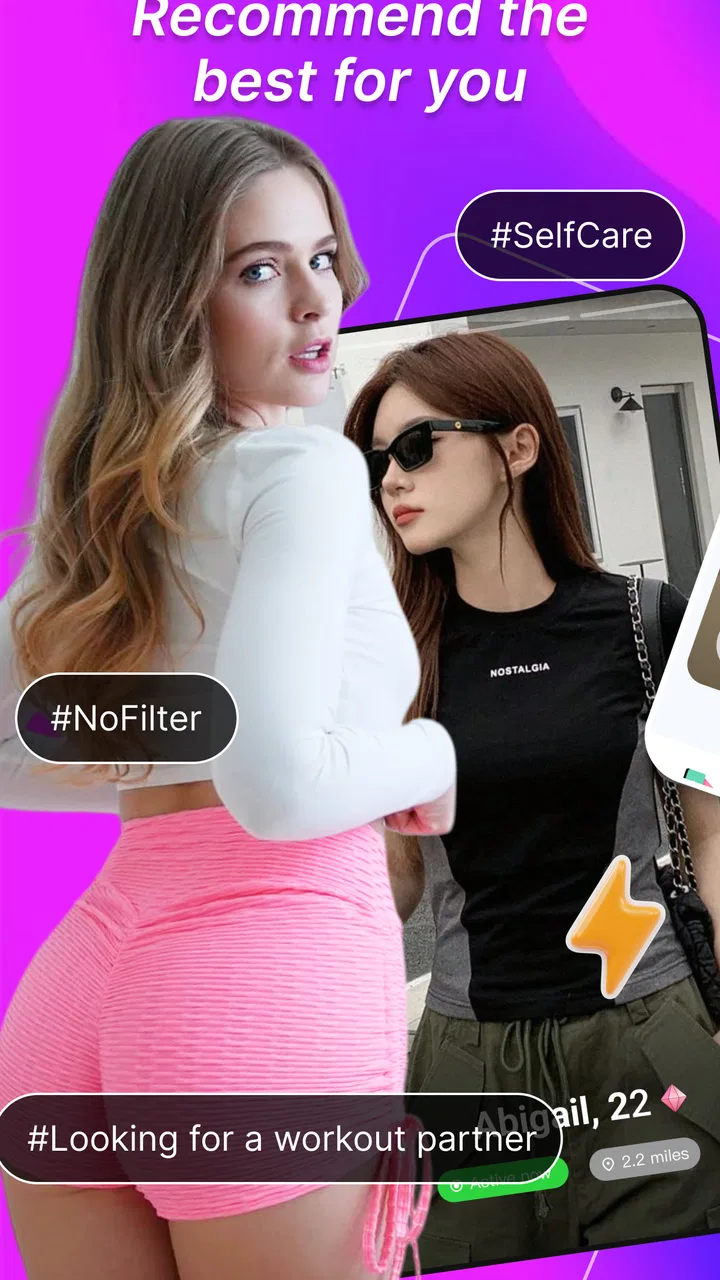
I approached FWB Dating & Local Meet: Lumi as a social app for people who want to discover nearby connections rather than spend all their time in broad, general-purpose feeds. Its central idea is simple: browse profiles, find people with similar interests, and turn a promising online interaction into a local conversation or meeting. That sounds straightforward, but the real value depends on how deliberately you use it.
My first impression is that Lumi is best understood as a focused discovery tool, not a complete replacement for every dating or social platform. The app is free to install, carries a Mature 17+ rating, and comes from developer Raja Emran. Its store summary points toward local bonding, while the short description is simply “Lumi,” so the practical experience matters more than a long list of promised features. I found that the app makes the most sense when I treated browsing as the beginning of a process rather than the whole purpose.
How I would build a useful Lumi routine
The baseline workflow is easy to understand. I would begin by setting up a profile that gives another person enough context to decide whether a conversation feels worthwhile. On a social app built around like-minded locals, a vague profile creates unnecessary back-and-forth. A clear introduction, a few honest interests, and a realistic sense of what kind of connection I want make the browsing stage more productive.
You May Also Like

 AccuWeather: Weather Radar
AccuWeather Review: A Quick, Clear Forecast for Everyday Decisions
For everyday plans, the best forecast is the one you can understand quickly. AccuWeather makes rain timing, radar, and local conditions easy to act on, with a few trade-offs.

 Hill Climb Racing
Why Hill Climb Racing Still Turns Crashes Into One More Run
A tiny car, a bumpy hill and one more upgrade: Hill Climb Racing keeps resurfacing because its simple chaos makes every near-miss feel personal.

 AliExpress - Shopping App
AliExpress Makes Global Shopping Feel Personal, but Shoppers Bear the Risk
AliExpress turns a global marketplace into a pocket-sized discovery engine. Its reach is useful, its shopping loop compelling, and its trade-offs easy to miss.

 Lords Mobile: Kingdom Wars
Lords Mobile Is a Kingdom-Building Routine, Not a Quick Match
A case-by-case verdict on the building, battles, device demands, and social commitments that make Lords Mobile rewarding for some players and exhausting for others.

 PDF Scanner app - TapScanner
TapScanner Makes Paperwork Easier to Capture, Check, and Share
TapScanner makes scanning with a phone feel less like a rescue operation and more like a dependable step in getting work done. Its capture tools are useful, though not flawless.

 Block Blast!
 Shows How Much a Puzzle Game Can Leave Out
A quiet grid game shows why puzzle players increasingly value instant clarity, repeatable skill and low-pressure play—and where the genre still needs to catch up.
More From Our News Desk
View All News


From there, I would browse with a specific question in mind: is this someone whose interests, communication style, or expectations seem compatible with mine? That is more useful than judging every profile as if it were a quick yes-or-no contest. Lumi’s local angle can make small details more meaningful. A shared hobby, a similar schedule, or interest in the same kind of social activity may be more practical than a long list of generic preferences.
I also recommend slowing down before moving a conversation toward an in-person meeting. A local connection can feel convenient, but convenience should not replace basic judgment. I would exchange enough messages to check whether the person communicates consistently and respects boundaries. For a first meeting, I would choose a public place, tell someone I trust where I am going, and keep control of my own transport. The Mature 17+ label is a reminder that this is not an app for children, but age guidance does not remove the need for personal safety.
A realistic everyday use case would be someone who has recently moved to a new neighborhood and wants to meet people outside work. Instead of opening the app at random throughout the day, I would use it during a short evening session, review a manageable number of profiles, and send thoughtful messages only when there is a genuine point of connection. If a conversation develops, I would suggest a simple public activity rather than treating the first meeting as a major commitment. That approach keeps the app useful without allowing it to take over my routine.
The same workflow can suit someone looking for a more casual connection, provided expectations are stated respectfully. The “FWB” positioning may appeal to adults who are not seeking a traditional relationship, but it does not mean that every user wants the same arrangement. Clear communication is essential. I would avoid assuming that a suggestive profile or a short reply automatically signals consent to a particular kind of interaction.
Settings and profile choices that deserve attention
Experienced use starts with checking the available account and discovery controls instead of accepting the initial setup without thought. I would review every option related to profile visibility, location presentation, notifications, and contact preferences. Even when an app keeps its controls simple, these choices affect how much attention I receive and how much personal information I reveal.
Location is especially important in a local-meetup app. I would share only the level of area detail that feels comfortable and avoid putting an exact home, workplace, or daily routine in my profile text. Being discoverable in a general region can support local conversation; exposing a precise private location adds risk without improving the quality of most introductions.
Notifications are another setting worth managing early. Dating and social apps can become distracting when every interaction demands an immediate response. I would keep alerts useful rather than allowing them to interrupt work, sleep, or time with friends. A scheduled check-in is often better than reacting to every notification, because it encourages me to answer with attention instead of sending rushed replies.
I would also revisit profile wording after using Lumi for a while. The first version of a profile is rarely the clearest one. If messages repeatedly ask the same question, that is a sign that an important detail could be explained more directly. On the other hand, I would not turn the profile into a full autobiography. The goal is to provide a starting point for conversation while keeping some information private until trust develops.
One practical tip is to separate public compatibility information from private identifying details. Public information might include hobbies, preferred types of conversation, or the kind of local activity I enjoy. Private information includes my exact address, workplace details, financial situation, and anything that could make me easy to locate. This simple distinction improves both safety and message quality.
Faster patterns that improve browsing
The fastest way to use Lumi is not to swipe or browse as quickly as possible. It is to reduce wasted conversations. I would decide beforehand what matters most to me, then use that standard consistently. For example, if I care about local availability and shared interests, I would look for those signals first. If a profile gives me no practical reason to start a conversation, moving on is more efficient than forcing an opening line.
I would keep a small set of natural conversation starters based on visible interests, but I would not copy and paste the same message to everyone. A short question connected to a person’s profile feels more genuine and gives them something easy to answer. It also reveals whether they read messages carefully and can maintain a two-way conversation.
Another useful habit is to distinguish curiosity from compatibility. Someone may look interesting without being a good match for my goals, schedule, or communication style. I would not treat every match or reply as an obligation to continue. Ending an unproductive conversation politely is better than allowing a long exchange to drift toward frustration.
For people with limited time, I would recommend short, repeatable sessions. A few focused minutes can be enough to review profiles, answer worthwhile messages, and remove conversations that clearly are not going anywhere. This is more sustainable than spending a long block of time browsing when tired, lonely, or bored, conditions that can lead to impulsive decisions.
I would also use conversation pacing as a filter. Someone who immediately pressures me for personal information, ignores a stated boundary, or pushes for an uncomfortable meeting is giving me useful information. I do not need to debate that behavior. Ending the interaction protects time and makes the rest of the app easier to manage.
Where Lumi fits beside familiar alternatives
Compared with a general social network, Lumi has a narrower purpose. A large social platform may be better for keeping up with existing friends, joining established communities, or following public interests. Lumi is more relevant when I want to discover people who may be open to a direct local connection. The trade-off is that a focused app may offer less of the surrounding content and community activity found in a broad network.
Compared with a traditional dating app, Lumi’s FWB and local-meetup framing may feel more direct for adults who are not looking for a conventional relationship path. That directness can save time when intentions align. It can also create more room for misunderstanding if people assume the label means identical expectations. I would still discuss boundaries, exclusivity, privacy, and meeting plans rather than relying on a category name to explain everything.
Compared with messaging someone through an existing community, Lumi can make discovery easier because the social purpose is clearer from the beginning. However, a hobby group or local event may provide more natural context and stronger trust signals. If I already belong to an active community connected to my interests, that route might be better for building friendships gradually. Lumi is most useful when I want a dedicated space for meeting adults with similar social intentions.
Costs, maturity, and practical expectations
Lumi is free to use at its basic entry point, which makes it easy to try without committing money immediately. There are in-app purchases ranging from around five dollars to around eighty dollars per item, so I would inspect any purchase screen carefully before paying. A paid option is worthwhile only if it solves a specific problem for me, such as improving a workflow I already understand. I would not spend simply because browsing feels slow or because I hope payment will guarantee better conversations.
The app has an average rating of 4.6 from around fourteen thousand ratings, with more than seven hundred written reviews, and it has passed one hundred thousand installs. Those figures suggest that Lumi has attracted a meaningful audience, but they do not predict whether the local user pool near me will be active or compatible. The quality of a location-based social app can vary considerably from one area to another.
Android compatibility is reasonably broad: the current version is 1.1.5 and requires Android 6.0 or later. That makes the app accessible on many older Android devices, although an older phone may still affect comfort through screen size, speed, battery condition, or notification reliability. I would keep the app updated when updates are available and pay attention to how it behaves on my particular device rather than assuming every phone will feel identical.
The most important limitation is that Lumi cannot manufacture chemistry, trust, or local activity. A polished profile does not guarantee replies, and a large overall install figure does not guarantee many suitable people in my immediate area. I would judge the app after a fair trial based on the quality and consistency of conversations, not only on how many profiles appear.
Advanced boundaries and the limits of optimization
There is a point where better habits stop improving the experience because the limitation is outside the user’s control. I can write a clearer profile, choose better messages, and manage notifications, but I cannot force another person to communicate honestly. I also cannot turn a weak local pool into a strong one through settings alone.
That is why I would avoid over-optimizing presentation. Constantly rewriting a profile, chasing every new interaction, or paying for features without a clear purpose can make the experience feel like a performance. A stable, honest profile is usually more useful than one designed to appeal to everyone.
I would also treat rapid intimacy as a warning rather than a success metric. Moving quickly from an introduction to private contact or an isolated meeting may feel exciting, but it reduces the time available to notice inconsistencies. A repeatable safety check is more valuable than a clever shortcut: keep early conversations inside the app when possible, avoid sharing sensitive details, verify that plans are public, and leave if the situation feels wrong.
People seeking a highly structured matchmaking system may find a conventional dating service more suitable. Those who want long-form community discussion may prefer a forum or interest group. Lumi is not the right choice for someone who dislikes direct social discovery, wants only platonic group activities, or expects the app to provide a guaranteed stream of compatible local people.
It may also be a poor fit for anyone under the stated age rating or for users uncomfortable with the adult-oriented framing. The app should be approached as an adults-only social environment, with direct communication and personal responsibility at its center.
My verdict after using it with intention
I see Lumi as a focused option for adults who want to browse for local connections without pretending that every interaction is the start of a traditional relationship. Its strongest quality is the clarity of its purpose: it gives users a place to look for like-minded people and decide whether a local conversation is worth pursuing.
My recommendation is to use it with a routine rather than passively. Set up a truthful profile, review privacy and notification choices, browse in short sessions, ask specific questions, and treat boundaries as part of the process. Those habits make a bigger difference than trying to maximize the number of interactions.
Lumi works best when it is used as a doorway to a careful conversation, not as a shortcut to instant intimacy. I would recommend trying it to adults who understand that local discovery can be uneven and who are willing to communicate clearly. I would skip it in favor of a broader community platform or a more structured dating service if my priorities were established groups, formal matchmaking, or a strictly platonic experience.
Overall, the free entry point makes experimentation reasonable, while the Mature 17+ positioning and optional purchases mean I would use it thoughtfully. It is not a magic solution for meeting people, but with realistic expectations, deliberate settings, and a safety-first approach, it can be a useful addition to an adult social routine.
FAQs for FWB Dating & Local Meet: Lumi
01What is FWB Dating & Local Meet: Lumi?
FWB Dating & Local Meet: Lumi is a dating and social discovery app focused on helping adults find nearby people interested in casual connections, friendship, or friends-with-benefits arrangements. Its main experience generally revolves around creating a profile, viewing suggested users, matching with people who share similar interests, and starting conversations. Before downloading, users should review the app’s current community rules and ensure its relationship style matches their expectations.
02How does matching and messaging work on Lumi?
After creating a profile, users can usually add photos, write about themselves, and indicate what type of connection they are seeking. The app may then present nearby or relevant profiles for browsing and interaction. Messaging availability can depend on mutual interest, account status, or premium features. Because dating-app functions and subscription limits may change, check the latest in-app details before assuming that unlimited likes, chats, or advanced filters are included for free.
03Is FWB Dating & Local Meet: Lumi free to download and use?
Lumi may be available to download without an upfront charge, but some functions can be restricted behind optional purchases or subscriptions. Common paid features in dating apps include enhanced visibility, additional likes, advanced search filters, profile boosts, or unlimited messaging. Review the pricing page carefully before confirming a trial or subscription, paying attention to renewal dates, cancellation instructions, and whether payments are handled through Google Play or the App Store.
04Is Lumi safe for meeting people locally?
No dating platform can guarantee that every profile is genuine or that an offline meeting will be risk-free. Use Lumi’s reporting and blocking tools when available, avoid sharing your home address or financial information, and take time to verify a person’s identity through conversation or a video call. For a first meeting, choose a busy public location, tell someone you trust where you are going, and arrange your own transportation.
05Who should use FWB Dating & Local Meet: Lumi, and what should users consider first?
Lumi is intended for adults who are comfortable meeting new people and communicating clearly about casual dating, friendship, or friends-with-benefits connections. Users should be honest about their intentions, respect boundaries, and confirm consent throughout every interaction. The app may not be suitable for anyone seeking only traditional long-term dating, users below the required age, or people uncomfortable with location-based discovery and sharing limited personal information online.
Pros
- Simple profile setup helps you start browsing quickly.
- Local discovery makes it easier to find nearby matches.
- The casual focus may suit users avoiding traditional dating pressure.
- Chat features support getting to know matches before meeting.
- Useful for exploring friendships as well as potential relationships.
Cons
- The user base may be smaller outside major cities.
- Some profiles may be incomplete or lightly maintained.
- Matching quality depends heavily on the information users provide.
- You may encounter inactive accounts during local searches.
- Privacy settings should be checked carefully before sharing personal details.

FWB Dating & Local Meet: Lumi
Gallery